Wednesday, May 26, 2010

USDA has funds! You may start locking your loans.

RE:                 Lender Update 2010-24

Funding for the USDA Guaranteed Rural Housing Program – Reinstatement of Chase Rural Housing’s Standard Interest Rate Lock and Extension Policies

In view of the information we have received today from USDA Rural Development regarding the Agency’s ability to issue loan approvals (Conditional Commitments: RD Form 1980-18) that are subject to Congressional action, Chase Rural Housing’s standard interest rate lock and lock extension policies have been reinstated effective immediately.


Posted via email from philipjensen's posterous

Monday, May 24, 2010

Mortgage Update

For the week of May 24, 2010 --- Vol. 8, Issue 21

In This Issue

Last Week in Review: Stock market teeters on the verge of becoming either a correction...or an "official" Bear market.

Forecast for the Week: A fully loaded plate of economic news is in store, including reads on housing and consumer attitudes.

View: How you can "insure" a smart and safe vacation this summer.

Last Week In Review

IT'S A SHOWDOWN...THE BULLS VS. THE BEARS. But we're not talking about the Chicago Bulls who were recently knocked out of the NBA playoffs. We're talking about the Bull Market that Stocks have enjoyed over the past months...that is now slipping back lower.

So why are these animal terms used to describe action in the Stock market anyways? The terms "Bull" and "Bear" are used because of the way those animals attack. Bulls attack using an upward thrusting motion with their horns, and Bears attack by moving their powerful claws in a downward motion. So an upward market is termed a Bull market, while a downward market is called a Bear market.

Last week, Stocks saw a sharp thrust downward, with prices down more than 10% from their peak. But that doesn't mean it's a Bear market just yet. Instead, the drop can be seen as a "correction", if prices recover and resume their uptrend. A correction can be quite healthy, and help a Bull market sustain its strength. But here's the trick: if the market drops 20% from its peak, it's officially considered a Bear market. That means every Bear market was once potentially just a correction. And so the debate rages on. Is this a good time to buy - because you believe it's a correction and prices will move much higher? Or is this a time to sell, before the correction turns into a Bear market? The answer should become clearer over the next few days, as the market's direction takes hold.

Waiting in the wings are Bond prices and home loan rates... A Bear market could help Bond prices and home loan rates improve a bit more, as some of the money from Stock sales finds its way into the Bond market, including Mortgage Bonds. On the other hand, a correction back to a Bull market will be at the expense of some of the recent improvements that Bonds and home loan rates have enjoyed.

The reality is, Mortgage Bonds have looked a lot like a lottery winner recently, since Bond prices really should be much lower, and home loan rates much higher. But Mortgage Bonds are catching every lucky break - from the situation in Greece...to the declining Euro...to the correction in the Stock market. It's all going in the favor of Mortgage Bonds...for now. But the Bond market's good fortune may not last very long - so be sure to give me a call if I can help explain the current rate situation, and how it might benefit you.

-----------------------
BULL MARKETS THRUST UPWARD...WHILE BEAR MARKETS SWIPE DOWNWARD

Despite the sharp sell-off in Stocks, the markets did receive some good news last week on the inflation front. The Producer Price Index (PPI) was reported lower than expectations for the month of April, and the more closely followed Consumer Price Index (CPI) fell to report the first month-over-month decline since March of 2009. And when volatile food and energy prices were removed from the equation, the annual Core index came in at its lowest level since January 1966. Those numbers appear to show that inflation is subdued - and with oil prices significantly lower from where they were a few weeks ago, there will even be more downward pressure on headline inflation in the next report.

But the reality is that inflation will eventually begin to rear its ugly head - and once that happens, inflation can accelerate rather quickly. China recently reported a spike in inflation - and last week, the UK saw surprisingly higher inflation numbers being reported as well. So the Fed - and the markets - will have to continue to keep close tabs on inflation in the US.

WHILE YOU CAN'T CONTROL IF THE BULLS OR BEARS WILL WIN THE NEXT ROUND IN THE MARKETS...THERE ARE SOME THINGS YOU CAN CONTROL. FOR EXAMPLE, CHECK OUT THE MORTGAGE MARKET GUIDE VIEW BELOW FOR TIPS ON "INSURING" A SMART AND SAFE VACATION THIS COMING SUMMER.

Forecast for the Week

There's a very full load of economic reports on tap this week, including fresh news on the health of the housing industry. After last week's reports on Housing Starts and Building Permits in April, we'll see reports on Existing Home Sales right away Monday morning and New Home Sales on Wednesday.

We'll also discover how consumers feel about the economy with a report on Consumer Confidence on Tuesday, followed by the Consumer Sentiment Index on Friday. Both reports have risen lately, indicating that consumers feel better about the present and future economic conditions. The markets will be watching to see if that trend continues in this week's reports.

The manufacturing sector of the economy will also be in the spotlight this week. Wednesday brings the Durable Goods Orders report, which measures new orders placed and is considered a leading indicator of manufacturing activity. That report will be followed by the Chicago PMI on Friday. This report surveys more than 200 Chicago purchasing managers about the manufacturing industry and is a good indicator of overall economic activity.

And if that wasn't enough, we'll also see more inflation news this week. First, the Gross Domestic Product (GDP) and GDP Chain Deflator for the first quarter will be released on Thursday. The Chain Deflator is a key inflation measure included in the GDP Report. And since inflation is the archenemy of Bonds and home loan rates, this report could be a market mover. Unlike the Consumer Price Index that was released last week, the Chain Deflator has the advantage of not being a fixed basket of goods and services, so changes in consumption patterns or the introduction of new goods and services will be reflected in the Chain Deflator. Then, one day after the Chain Deflator comes out, we'll see the Personal Consumption Expenditures report on Friday. This report measures price changes in consumer goods and services, and is considered the Fed's favorite gauge on inflation. After last week's better-than-expected inflation news, the markets will definitely be watching these reports.

Rounding out the week, we'll also see reports on Personal Income and Personal Spending this Friday.

But that's not all...in addition to all those reports, the government will auction off $42 Billion of 2-years on Tuesday, $40 Billion of 5-years on Wednesday, and $31 Billion of 7-years on Thursday. These auctions may move the markets depending on how they are received.

Oh, not to mention that the news coming out of Europe may once again add to the market's volatility here at home.

That's a very full helping of potentially market moving activity. But you can count on me to be here and watching very closely. And remember: Weak economic news normally causes money to flow out of Stocks and into Bonds, helping Bonds and home loan rates improve, while strong economic news normally has the opposite result.

As you can see in the chart below, Mortgage Bonds have improved over the last few weeks, as Stocks have undergone their move lower. I'll be watching closely to see if Bonds...and home loan rates...can continue to improve in the week ahead.

-----------------------
Chart: Fannie Mae 4.5% Mortgage Bond (Friday, May 21, 2010)

The Mortgage Market View

"Insuring" a Smart and Safe Vacation

Summer is right around the corner, and that means many people are starting to plan some kind of summer getaway.

When planning your fun-filled itinerary, the last thing you want to do is worry about any financial loss that might occur as a result of a missed flight, an injury or illness, lost baggage, or any other unforeseen incident. To ensure your peace of mind while away from home, many companies provide several different types of traveler's protection plans to help ease the burden.

Without insurance, a traveler can lose nonrefundable deposits and prepayments that can add up to hundreds, or even thousands, of dollars. A good, comprehensive travel insurance plan will often reimburse a traveler for all pre-paid, nonrefundable expenses for a covered loss.

Here are some general types of coverage you may want to consider before heading out for this summer's vacation:

Travel Arrangement Protection - This covers you in case of trip cancellation, interruption, or travel delays (these can include inclement weather, lost or stolen passports, quarantine, hijacking or natural disaster).

Medical Protection - Just because you have health insurance at home, the moment you set foot on foreign soil or even set sail on a cruise, many health plans are considered null and void, so be sure you get travel medical protection to cover emergency medical expenses, such as illness and accident expenses, and emergency medical transportation to the nearest medical facility.

Baggage Protection - Not only do you want coverage for lost, stolen or damaged baggage, but many plans offer reimbursement for the purchase of essential items if baggage is delayed.

Worldwide Emergency Assistance - If traveling outside of the country, make sure you purchase a policy that covers international emergencies. This can include emergency cash transfer assistance, legal assistance, and lost travel documents assistance.

The cost of travel insurance is based, in most cases, on the value of the trip and the age of the traveler. Typically, the cost is 5-7 percent of the trip cost. Like most every other type of insurance, be it automobile, medical, or homeowner's, you hope you never need to use it. But it can be a relief to have it when you do need it.

The bottom line is: Before embarking on your next trip, do your homework! Talk to your insurance agent - or call me for a recommendation - and learn more about all the different insurance options available to you, so you can make the best choice for your peace of mind!


Posted via email from philipjensen's posterous

Tuesday, May 18, 2010

USDA funds

At this time the USDA is out of money and they will not be issuing subject to funds conditional commitments.  Please share this information with all your colleagues and borrowers.  Please share your concerns with your senators and congressman as well.  There is currently three pieces of legislation that we are waiting to pass in order to have more funds.

Kyl, Jon - (R - AZ)

Class I

730 HART SENATE OFFICE BUILDING WASHINGTON DC 20510

(202) 224-4521

Web Form: kyl.senate.gov/contact.cfm

McCain, John - (R - AZ)

Class III

241 RUSSELL SENATE OFFICE BUILDING WASHINGTON DC 20510

(202) 224-2235

Web Form: mccain.senate.gov/public/index.cfm?FuseAction=Contact.Con...

Posted via email from philipjensen's posterous

Monday, May 3, 2010

Weekly Mortgage Update

Phil Jensen

Mortgage Director

AmeriFirst Financial

Phone: 602-692-7445

Fax::

Phil@JensenTeam.com

www.JensenTeam.com


In This Issue  


Last Week in Review: Little change came from the Fed's latest meeting. Find out what that means for home loan rates, and also why Greece is still the word!

Forecast for the Week: Two juicy economic reports bookend the week, bringing highly anticipated news on inflation and the labor market.


Last Week In Review  


They say "the only constant is change...", yet last week's meeting of the Federal Open Market Committee ended without any major changes...no change to the Fed Funds Rate, and no change to the now-famous verbiage in their Policy Statement, stating that rates will remain low for an "extended period" of time. While the Fed does not control home loan rates, what does all this mean for those seeking home financing in the months ahead? Read on for details.

There are two important things to note about last week's Fed meeting. First, despite strong earnings, a stronger Stock market, and better consumer confidence and housing numbers, St. Louis Fed President Thomas Hoenig remains the lone dissenter to the verbiage in the Policy Statement on keeping rates low for an "extended period." He feels that there is a strong risk of inflation ahead...and that the Fed needs to prepare the markets for the eventual hikes that will be coming to the Fed Funds Rate. When the Fed does indeed change this language, it will signal that the Fed has a consensus on inflation being a threat...and since inflation is the arch-enemy of home loan rates, the change in verbiage will cause rates to move higher.

In addition, the Fed made no mention in their Policy Statement about selling any of their Mortgage Backed Security (MBS) holdings - and the added supply coming into the market will also cause home loan rates to rise. That said, the Fed may have discussed the topic during the meeting, and it could come up when the Meeting Minutes are released. There is growing concern that if the Fed doesn't begin selling some of these MBS holdings by 2011 that additional asset bubbles may arise. It's likely that the Fed will look to sell a meaningful chunk by year end, and this will be yet another headwind for home loan rates during the coming year.

If you want to see if you can benefit from the current low-rate environment before these items adversely impact home loan rates, please give me a call or send me an email...and as always, please feel free to pass along this newsletter to a friend, coworker or family member that might benefit.

In other news, Consumer Confidence rose sharply in April, to its highest reading since September 2008. This number is important because the more confident that consumers feel...the more likely it is that they will help fuel the economy. Also, the Commerce Department's Gross Domestic Product Report indicated that the economy grew for the third straight quarter, despite the report coming in slightly below estimates. Inflation readings within the report remained tame, giving the Fed cover to keep interest rates low, with inflation appearing to be subdued. But inflation concerns can arise quickly, and although the Fed is not acting just now...we can be sure they are watching very carefully.

Greece was still the word last week, as Standard & Poor's Bond rating agency downgraded the debt of Greece to "junk" status. The lack of confidence in Greece's ability to repay their debt has pushed yields on their 2-Year Notes up to a whopping 18% to try and incent investors - and by way of comparison, our own US 2-Year Notes are yielding just over 1%! This is why credit downgrades are such a concern, and why the warnings from Moody's about the US overspending must be taken very seriously.

There has been much greater volatility in the Bond market lately, with large price swings in both directions. It's no coincidence that the volatility increased just after the Fed exited their buying program. While concerns about Greece have caused some investors to lose some confidence in European debt instruments, and move their holdings over to US securities, which are viewed as a safer bet, the situation is fluid and there's no telling how much and for how long Bonds and home loan rates will benefit from the situation. Overall - the mix of news and market activity benefitted Bonds and home loan rates last week, improving to better levels over the week prior.


Forecast for the Week  


Two important reports bookend the week ahead, and hopefully both will show changes in a good economic direction.

Monday's Personal Income and Personal Spending Reports will give us a look at the Core Personal Consumption Expenditure (PCE), which is the Fed's favorite gauge of inflation. Rest assured the Fed will be watching this report very closely, as it could impact their decisions on rates and Policy Statement verbiage, as we discussed.

Thursday will bring another Initial Jobless Claims Report. At this stage in the economic recovery, the weekly Initial Jobless Claims readings we are seeing are still pretty high, which suggests that businesses are both reluctant to hire and are looking to trim overhead.

And the big enchilada of employment news wraps up the week, as April's Jobs Report is due for delivery on Friday morning. Last month's report showed that 162,000 jobs were created in March, making it the biggest one-month increase in three years. Additionally, there were upward revisions to January and February, which brought the last two months' net job losses to near zero. But it's not time to break out the party hats just yet...last month's report also showed that the official Unemployment Rate remained steady at 9.7%, and when factoring in the "underemployed", including people who accepted part-time work because full-time work is simply not available, the rate of unemployment overall rose from 16.8% to 16.9%. This report will be very important to watch, as the labor market is key to our economic recovery.

Remember this rule of thumb: Weak or negative economic news normally causes money to flow out of Stocks and into Bonds, helping Bonds and home loan rates improve, while strong or positive economic news normally has the opposite result.

As you can see in the chart below, the instability in Greece and the Fed's decision to keep rates low for an extended period of time gave Bonds a boost above a key technical level. But remember, volatility is the name of the game at the moment, and things can change quickly. I'll be watching closely to see in which direction Bonds and home loan rates move this week - and always welcome a call or email from you if I can help answer any questions!

-----------------------
Chart: Fannie Mae 4.5% Mortgage Bond (Friday, April 30, 2010)


The Mortgage Market View  


Remember, as a general rule, weaker than expected economic data is good for rates, while positive data causes rates to rise.

Economic Calendar for the Week of May 03 - May 07

Date

ET

Economic Report

For

Estimate

Actual

Prior

Impact

Mon. May 03

08:30

Personal Income

Mar

0.3%


0.0%

Moderate

Mon. May 03

08:30

Personal Spending

Mar

0.6%


0.3%

Moderate

Mon. May 03

08:30

Personal Consumption Expenditures and Core PCE

Mar

NA


0.0%

HIGH

Mon. May 03

08:30

Personal Consumption Expenditures and Core PCE

YOY

NA


1.3%

HIGH

Mon. May 03

10:00

ISM Index

Apr

60.0


59.6

HIGH

Wed. May 05

08:15

ADP National Employment Report

Apr

30K


-23K

Moderate

Wed. May 05

10:00

ISM Services Index

Apr

56.1


55.4

Moderate

Thu. May 06

08:30

Jobless Claims (Initial)

5/01

440K


448K

Moderate

Thu. May 06

08:30

Productivity

Q1

2.4%


6.9%

Moderate

Fri. May 07

08:30

Average Work Week

Apr

34.0


34.0

HIGH

Fri. May 07

08:30

Hourly Earnings

Apr

0.1%


-0.1%

HIGH

Fri. May 07

08:30

Non-farm Payrolls

Apr

187K


162K

HIGH

Fri. May 07

08:30

Unemployment Rate

Apr

9.7%


9.7%

HIGH


p

Posted via email from philipjensen's posterous

Wednesday, April 28, 2010

USDA UPDATE

I wanted to give you more news, supplement bill HR 5017 Rural Housing Preservation and Stabilization Act of 2010 has passed the House!  The majority of the House (85%), voted in favor of HR 5017.  Once the bill passes the Senate and is signed into law by the president, we will have an additional 30 billion in funding.


As always thank you for your support in this much needed affordable housing program.


Thanks,


Phil

Posted via web from philipjensen's posterous

Monday, April 26, 2010

Weekly Mortgage Rate Update

<!DOCTYPE html PUBLIC "-//W3C//DTD XHTML 1.0 Transitional//EN" "http://www.w3.org/TR/xhtml1/DTD/xhtml1-transitional.dtd">

<html xmlns="http://www.w3.org/1999/xhtml" xml:lang="en" lang="en">

<title>MMG Weekly</title>

<meta http-equiv="Content-Type" content="text/html; charset=iso-8859-1" />

<link href="http://www.mmgweekly.com/admin/stylesheets/master.css" rel="stylesheet" type="text/css" />

<body bgcolor="#FFFFFF" leftmargin="0" topmargin="0" marginwidth="0" marginheight="0">

<table border="0" width="100%" cellpadding="0" cellspacing="0">

                <tr>

                                <td align="left"><span class="HeaderOptions">If you can't see the newsletter, or would like to view it online, use this link</span></td>

                                <td align="right">

                                                <!-- THIS OPTION VISIBLE WHEN ADD REQUEST EMAIL IS SELECTED -->

                                                <span class="HeaderOptions">If you have received this newsletter indirectly and would like to be added to our weekly distribution list, use this link</span>


                                </td>

                </tr>

</table>

<table width="100%" border="0" cellpadding="0" cellspacing="0">

  <tr bgcolor="#000000">

    <td valign="top" width="300"><img src="http://www.mmgweekly.com/admin/images/mmg_logo.gif" width="300" height="92" /></td>

    <td> <div align="right"><img src="http://www.mmgweekly.com/templates/images/weekly/banner_weekly_Blue.jpg" width="376" height="92" /></div></td>

  </tr>

  <tr>

    <td height="125" colspan="2" bgcolor="#FFFFFF" style="border-top:1px solid #000000; border-bottom:1px solid #000000;">

      <table width="100%" border="0" cellpadding="0" cellspacing="0">

        <tr>

          <td width="10">&nbsp;</td>

          <td width="220" align="center">

                                                <div><img src="http://www.mmgweekly.com/member/32989/images/jensen-amerifirst.gif-final.gif" alt="Amerifirst Financial" /></div>


                                  </td>

                                  <td width="5">&nbsp;</td>

          <td><table width="100%" border="0" cellspacing="0" cellpadding="2">

              <tr>

                <td colspan="2" class="Header" nowrap="nowrap">Provided to you Exclusively by Phil Jensen</td>

              </tr>

              <tr valign="top">

                <td width="50">

                  <div align="right" class="Header">&nbsp;</div></td>

                <td class="BrandingBlue" nowrap="nowrap">&nbsp;</td>

              </tr>

                                                </table>


                                  </td>

                                  <td width="5">&nbsp;</td>

          <td width="300" valign="middle" class="ContactText">

                                                <div align="right">

                                                Phil&nbsp;Jensen

                                                <br />

                                                Senior Mortgage Consultant

                                                <br />

                                                Amerifirst Financial


                                                <br />

                                                Office: <span class="ContactInfoBlue">480-682-6613</span>

                                                <br />

            Cell: <span class="ContactInfoBlue">602-692-7445</span>

                                                <br />

                                                Fax: <span class="ContactInfoBlue">480-374-6987</span>

                                                </span>

                                                </span>

                                                </span>

                                                <br />

                                                E-Mail: Phil@JensenTeam.com

                                                <br />

                                                Website: www.PhilipJensen.com

                                                </div>

                                  </td>

                                  <td width="5">&nbsp;</td>

          <td width="110"> <div align="right"><img src="http://www.mmgweekly.com/member/32989/images/philip-jensen-photo.gif-finallll..." alt="Phil Jensen" /></div></td>

          <td width="10">&nbsp;</td>

                                </tr>

      </table></td>

  </tr>

</table>

<!-- START NEWSLETTER BODY -->

<!-- BEGIN DATE -->

<table width="98%" border="0" align="center" cellpadding="5" cellspacing="0">

<tr>

<td class="ContentBold" align="right">For the week of Apr 26, 2010 --- Vol. 8, Issue 17</td>

</tr>

</table>

<!-- END DATE -->

<table width="100%" border="0" cellspacing="0" cellpadding="0">

  <tr>

    <td height="7"></td>

  </tr>

</table>

<!-- BEGIN SECTION_1 -->

<!-- BEGIN SECTION_1_NAME -->

<table width="98%" border="0" cellpadding="5" cellspacing="0">

  <tr>

    <td><span class="SectionHeaderBlue">In This Issue</span> <img src="http://www.mmgweekly.com/admin/images/sym_arrow.gif" width="4" height="8" /></td>

  </tr>

</table>

<!-- END SECTION_1_NAME -->

<table width="98%" border="0" cellpadding="0" cellspacing="0" background="http://www.mmgweekly.com/admin/images/tile_dottedline.gif">

  <tr>

    <td><img src="http://www.mmgweekly.com/admin/images/spacer.gif" width="100%" height="1" /></td>

  </tr>

</table>

<!-- BEGIN SECTION_1_CONTENT -->

<table width="98%" border="0" cellpadding="19" cellspacing="0">

  <tr>

    <td class="Content_Just"><p><strong>Last Week in Review</strong>: Greece's ongoing financial saga moves the markets, along with continuing announcements on more whopping amounts of debt supply being pumped out.</p>

<p><strong>Forecast for the Week</strong>: This week will bring a wide range of reports, including looks at consumer attitudes, the Fed's policy, employment, manufacturing, and Gross Domestic Product.</p>

<p><strong>View</strong>: There's less than one week left before the Homebuyers Tax Credit expires on April 30th...read the details, and pass on to anyone who needs to know more!</p>

</td>

  </tr>

</table>

<!-- END SECTION_1_CONTENT -->

<!-- END SECTION_1 -->

<!-- BEGIN SECTION_2 -->

<!-- BEGIN SECTION_2_NAME -->

<table width="98%" border="0" cellpadding="5" cellspacing="0">

  <tr>

    <td><span class="SectionHeaderBlue">Last Week In Review </span><img src="http://www.mmgweekly.com/admin/images/sym_arrow.gif" width="4" height="8" /></td>

  </tr>

</table>

<!-- END SECTION_2_NAME -->

<table width="98%" border="0" cellpadding="0" cellspacing="0" background="http://www.mmgweekly.com/admin/images/tile_dottedline.gif">

  <tr>

    <td><img src="http://www.mmgweekly.com/admin/images/spacer.gif" width="100%" height="1" /></td>

  </tr>

</table>

<!-- BEGIN SECTION_2_CONTENT -->

<table width="98%" border="0" cellpadding="19" cellspacing="0">

  <tr>

    <td class="Content_Just">

                                <p><strong>"IT'S ALL GREEK TO ME."</strong>  The markets continue to be focused on - and influenced by - Greece's ongoing financial saga. Stocks took a hit last Thursday when Greece's budget deficit was reported to be worse than previously thought, causing uncertainty and anxiety in the markets. The next day, the saga continued when Greek Prime Minister George Papandreou asked the European Union and International Monetary Fund to activate their huge $45 Billion Euro aid package. That news helped relieve some of the uncertainty in the markets, but this story is far from over. Greece will need to take some dramatic measures to bring their budget deficit to a significantly lower level. </p>

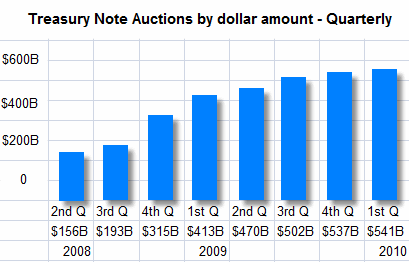
<p>The $45 Billion Euro bailout for Greece wasn't the only whopping figure in the news last week. Here at home, the U.S. Treasury Department announced that it will unload $129 Billion of debt this week in 5-year Treasury Inflation Protected Securities and 2-, 5- and 7-year Notes.  The massive amount of debt supply being loaded into the markets just keeps on coming - and it's getting larger.  As you can see from the chart below, the Treasury auctions have more than doubled since the 2nd quarter of 2008...and this doesn't even include the regularly scheduled T-Bill auctions each week or the monthly 30-year Bond auctions. This week's huge amount of supply could prevent Bond prices - and home loan rates - from improving when it hits the markets.</p>

<p><strong>-----------------------<br />

<span style='color:red'>Chart: Treasury Note Auctions (By Quarter) </span></strong></p>

<img src="http://www.mmgweekly.com/templates/mmgweekly/spe_chart/topchart42610.gif" />

<p>Speaking of more supply...the Fed announced last week that it may start trimming its balance sheet by selling some of its Mortgage Backed Securities assets as early as the 3rd or 4th quarter of this year. Remember, the Fed recently ended its purchase program in which it purchased $1.25 Trillion in Mortgage Backed Securities to help lower home loan rates and stabilize the housing sector. Since the program ended, the market has been very volatile. Despite the fluctuations, rates remain good overall, but once the Fed starts to sell some of their huge holdings, rates will likely rise as even more supply comes into the market. </p>

<p>Overall, rates ended the week slightly worse than where they started, but still at very attractive levels. That makes now a crucial time to take advantage of the opportunities that exist - including the Homebuyers Tax Credit, which is about to expire!</p>

<p><strong><em>THERE'S LESS THAN ONE WEEK LEFT BEFORE THE HOMEBUYERS TAX CREDIT EXPIRES ON APRIL 30! CHECK OUT THE MORTGAGE MARKET GUIDE VIEW BELOW FOR IMPORTANT DETAILS.</em></strong></p>


  </tr>

</table>

<!-- END SECTION_2_CONTENT -->

<!-- END SECTION_2 -->

<!-- BEGIN SECTION_3 -->

<!-- BEGIN SECTION_3_NAME -->

<table width="98%" border="0" cellpadding="5" cellspacing="0">

  <tr>

    <td><span class="SectionHeaderBlue">Forecast for the Week</span> <img src="http://www.mmgweekly.com/admin/images/sym_arrow.gif" width="4" height="8" /></td>

  </tr>

</table>

<!-- END SECTION_3_NAME -->

<table width="98%" border="0" cellpadding="0" cellspacing="0" background="http://www.mmgweekly.com/admin/images/tile_dottedline.gif">

  <tr>

    <td><img src="http://www.mmgweekly.com/admin/images/spacer.gif" width="100%" height="1" /></td>

  </tr>

</table>

<!-- BEGIN SECTION_3_CONTENT -->

<table width="98%" border="0" cellpadding="19" cellspacing="0">

<tr>

<td class="Content_Just">

<A name="view"/>


<p>After a busy week of economic reports last week, this week doesn't slow up at all. On tap is a look at how consumers feel about the slowly recovering economy with the <strong>Consumer Confidence</strong> report on Tuesday and the <strong>Consumer Sentiment Index</strong> on Friday. In the prior reports, Consumer Confidence came in higher than expectations, while Consumer Sentiment dropped. The markets will be watching both these reports for indications of how consumers feel about the job market and their finances. </p>

<p>We'll also hear from the Fed this week with the <strong>Fed's Monetary Policy</strong> and <strong>Fed Funds Rate</strong> decision on Wednesday. With future inflation concerns on the minds of some Fed members, it will be interesting to see if the Fed continues to use the now famous statement, "rates will stay exceptionally low for an extended period."

<p>The weekly <strong>Initial Jobless Claims</strong> report comes out Thursday, and after a worse-than-expected report last week, the markets will be tuned in closely to this week's update.</p>

<p>Finally, the week ends on a busy note. Friday, we'll get a look at labor costs with the <strong>Employment Cost Index</strong>, the manufacturing industry with the <strong>Chicago PMI</strong>, and goods and services in the US with the <strong>Gross Domestic Product</strong> report. </p>

<p>In addition to these reports, the Treasury Department will auction off the $129 Billion of debt mentioned above. That breaks down to auctions of $11 Billion in 5-year TIPS (treasury inflated-protected securities) on Monday, $44 Billion in 2-year Notes on Tuesday, $42 Billion in 5-year Notes on Wednesday and $32 Billion in 7-year Notes on Thursday. That's a whopping amount of supply, and it could move the markets depending on how it's received.</p>

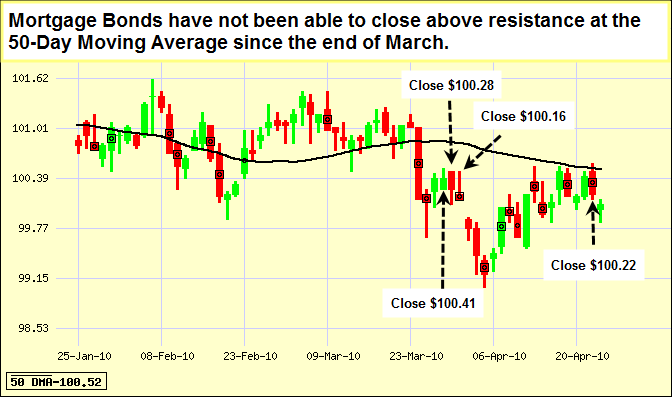
<p><strong><u>Remember: Weak economic news normally causes money to flow out of Stocks and into Bonds, helping Bonds and home loan rates improve, while strong economic news normally has the opposite result.</u></strong>  As you can see in the chart below, Mortgage Bonds have not been able to close above technical resistance at the 50-Day Moving Average since the end of March.</p>

<p><strong>-----------------------<br />

<span style='color:red'>Chart:  Fannie Mae 4.5% Mortgage Bond (Friday, April 23, 2010)</span></strong></p>

<img src="http://www.mmgweekly.com/templates/mmgweekly/reg_chart/244/images/weeklychart..." />

<br />

</td>

</tr>

</table>

<!-- END SECTION_3_CONTENT -->

<!-- END SECTION_3 -->

<!-- BEGIN SECTION_4 -->

<!-- BEGIN SECTION_4_NAME -->

<table width="98%" border="0" cellpadding="5" cellspacing="0">

  <tr>

    <td><span class="SectionHeaderBlue">The Mortgage Market View</span> <img src="http://www.mmgweekly.com/admin/images/sym_arrow.gif" width="4" height="8" /></td>

  </tr>

</table>

<!-- END SECTION_4_NAME -->

<table width="98%" border="0" cellpadding="0" cellspacing="0" background="http://www.mmgweekly.com/admin/images/tile_dottedline.gif">

  <tr>

    <td><img src="http://www.mmgweekly.com/admin/images/spacer.gif" width="100%" height="1" /></td>

  </tr>

</table>

<!-- BEGIN SECTION_4_CONTENT -->

<table width="98%" border="0" cellpadding="19" cellspacing="0">

  <tr>

    <td class="Content_Just"><p>

<strong>Homebuyers Tax Credit Expires This Week!<br />

Thousands of Dollars Could Slip Through Your Fingers!</strong>

</p>

<p>The heat is on for those who are out shopping for homes right now - as the Homebuyers Tax Credit is about to come to an end.   </p>

<p>Last November, the government expanded and extended the new Homebuyers Tax Credit. According to the program, first-time homebuyers are eligible for a tax credit of up to 10% of the purchase price of the home, with a maximum credit of $8,000. And current homeowners are eligible for up to $6,500.</p>


<p>Although military personnel may qualify for a special extension, the vast majority of homeowners must have contracts in effect no later than April 30, 2010 and must close no later than June 30, 2010 to qualify for the credit.</p>

<p><strong><em><u>This means that homebuyers now have less than one week to get their paperwork going to qualify for this credit, before it goes away!</u></em></strong></p>


<p>Here are some important details about this tax credit.</p>

<p><strong>Dollar-for-Dollar Benefit</strong></p>


<p>The benefit of a tax credit is that it's a dollar-for-dollar benefit, rather than a "tax deduction" or reduction in tax liability that would only reduce $1,000 to $1,500 when all was said and done. </p>


<p>So, if a first-time homebuyer who qualified for the entire benefit were to owe $8,000 in income taxes and would qualify for a tax credit of $8,000, she would owe nothing.</p>


<p><strong>Even Better... It's Refundable!</strong></p>


<p>Remember, because it's a tax credit, it's refundable! That means a homebuyer can receive a check for the credit if he or she has little or no income tax liability. </p>


<p>For example, if a first-time homebuyer is eligible for a tax credit of $8,000 but is liable for $4,000 in income tax, she can still receive a check for the remaining $4,000!</p>


<p><strong>What are the Income Caps?</strong></p>


<p>Single tax filers with incomes up to $125,000 are eligible for the total credit amount. Those who earn more than this cap can receive a partial credit. However, single filers with incomes of $145,000 and above are ineligible.</p>


<p>Joint filers with incomes up to $225,000 are eligible for the total credit amount. Those who earn more than this cap can receive a partial credit. However, joint filers with incomes of $245,000 and above are ineligible.</p>


<p><strong>What's the Maximum Purchase Price?</strong></p>


<p>Qualifying buyers may purchase a property with a maximum sales price of $800,000.</p>

<p><strong><em>If you or someone you know is in the process of purchasing a home, this is an important week to take action - feel free to forward this article to anyone who it might benefit.  And give me a call with any questions - the clock is ticking and the deadline is Friday!!</em></strong></p>

<hr />

<p><strong><u>Remember, as a general rule, weaker than expected economic data is good for rates, while positive data causes rates to rise.</u></strong></p>

                                <!-- BEGIN ECON_CAL -->


<p class="ContentBold" style="width:98%;">Economic Calendar for the Week of April 26 - April 30</p>

<table width="700" border="0" cellpadding="0" cellspacing="0" bgcolor="#000000">

<tr>

<td>

<table width="100%" border="0" cellpadding="3" cellspacing="2">

<tr bgcolor="#00CCFF" class="ContentBold">

<td><div align="center">Date</div></td>

<td><div align="center">ET</div></td>

<td><div align="center">Economic Report </div></td>

<td><div align="center">For</div></td>

<td><div align="center">Estimate</div></td>

<td><div align="center">Actual</div></td>

<td><div align="center">Prior</div></td>

<td><div align="center">Impact</div></td>

</tr>

<tr bgcolor="#FFFF99" class="Content">

<td bgcolor="#FFFF99">Tue. April 27</td>

<td bgcolor="#FFFF99"><div align="center">10:00</div></td>

<td bgcolor="#FFFF99">Consumer Confidence</td>

<td bgcolor="#FFFF99"> <div align="center">Apr</div></td>

<td bgcolor="#FFFF99"><div align="center">53.7</div></td>

<td bgcolor="#FFFF99"><div align="center">&nbsp;</div></td>

<td bgcolor="#FFFF99"><div align="center">52.5</div></td>

<td bgcolor="#FFFF99"><div align="center">Moderate</div></td>

</tr>

<tr bgcolor="#66FF99" class="Content">

<td bgcolor="#66FF99">Wed. April 28</td>

<td bgcolor="#66FF99"><div align="center">10:30</div></td>

<td bgcolor="#66FF99">Crude Inventories</td>

<td bgcolor="#66FF99"> <div align="center">4/24</div></td>

<td bgcolor="#66FF99"><div align="center">NA</div></td>

<td bgcolor="#66FF99"><div align="center">&nbsp;</div></td>

<td bgcolor="#66FF99"><div align="center">1.89M</div></td>

<td bgcolor="#66FF99"><div align="center">Moderate</div></td>

</tr>

<tr bgcolor="#66FF99" class="Content">

<td bgcolor="#66FF99">Wed. April 28</td>

<td bgcolor="#66FF99"><div align="center">02:15</div></td>

<td bgcolor="#66FF99">FOMC Meeting</td>

<td bgcolor="#66FF99"> <div align="center">&nbsp;</div></td>

<td bgcolor="#66FF99"><div align="center">0.25%</div></td>

<td bgcolor="#66FF99"><div align="center">&nbsp;</div></td>

<td bgcolor="#66FF99"><div align="center">0.25%</div></td>

<td bgcolor="#66FF99"><div align="center">HIGH</div></td>

</tr>

<tr bgcolor="#FFFF99" class="Content">

<td bgcolor="#FFFF99">Thu. April 29</td>

<td bgcolor="#FFFF99"><div align="center">08:30</div></td>

<td bgcolor="#FFFF99">Jobless Claims (Initial)</td>

<td bgcolor="#FFFF99"> <div align="center">4/24</div></td>

<td bgcolor="#FFFF99"><div align="center">440K</div></td>

<td bgcolor="#FFFF99"><div align="center">&nbsp;</div></td>

<td bgcolor="#FFFF99"><div align="center">456K</div></td>

<td bgcolor="#FFFF99"><div align="center">Moderate</div></td>

</tr>

<tr bgcolor="#66FF99" class="Content">

<td bgcolor="#66FF99">Fri. April 30</td>

<td bgcolor="#66FF99"><div align="center">08:30</div></td>

<td bgcolor="#66FF99">Gross Domestic Product (GDP)</td>

<td bgcolor="#66FF99"> <div align="center">Q1</div></td>

<td bgcolor="#66FF99"><div align="center">3.2%</div></td>

<td bgcolor="#66FF99"><div align="center">&nbsp;</div></td>

<td bgcolor="#66FF99"><div align="center">5.6%</div></td>

<td bgcolor="#66FF99"><div align="center">Moderate</div></td>

</tr>

<tr bgcolor="#66FF99" class="Content">

<td bgcolor="#66FF99">Fri.

Posted via email from philipjensen's posterous